A printed-label generator built as a workbook the client can maintain himself
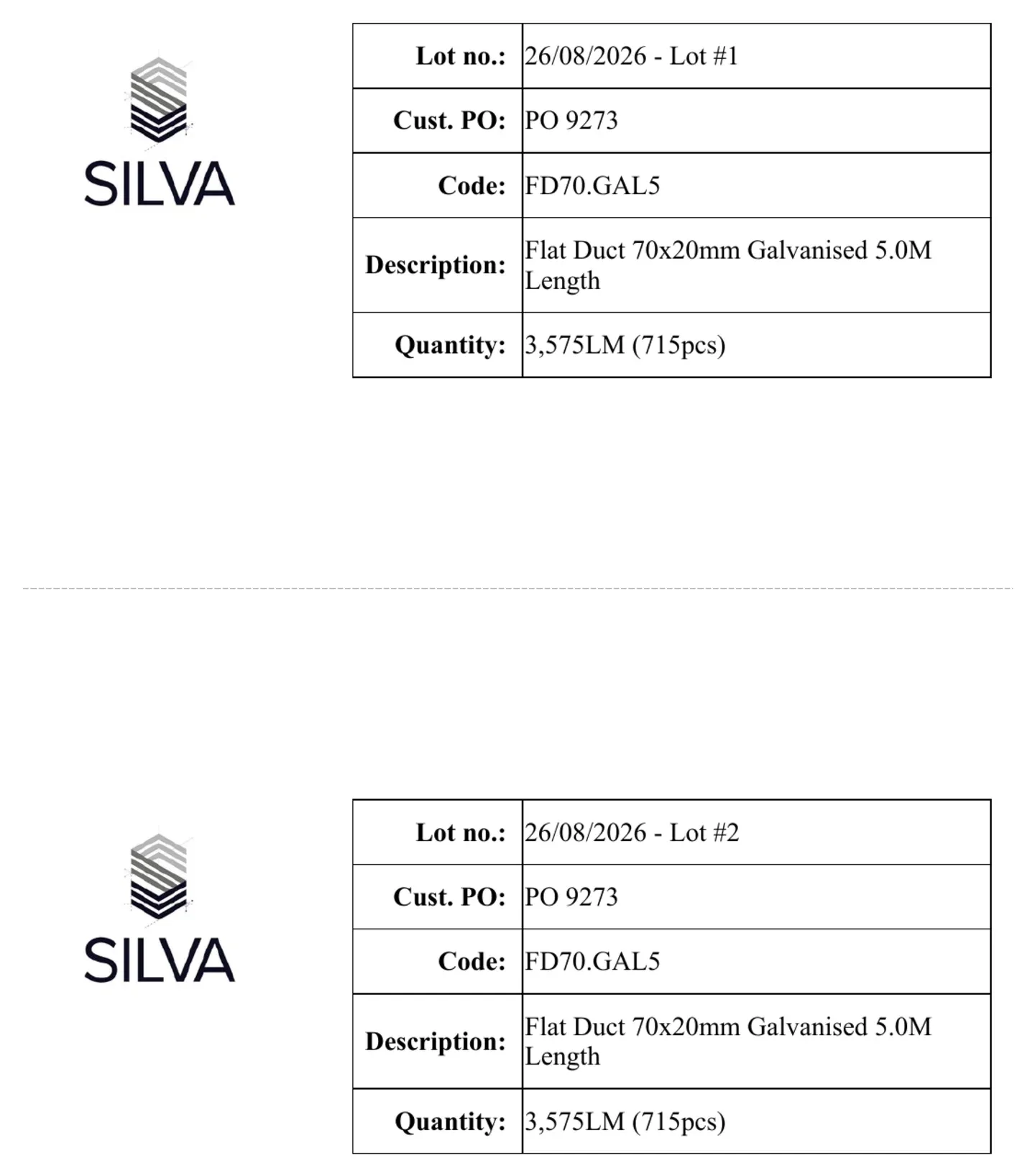
1 / 4 · Open full size
A self-contained Excel workbook that prints A5 product labels two to a page, with per-order lot numbering and an editable product list the client maintains himself.
A steel manufacturing business needed product labels printed on the shop floor. They did not need a system — they needed a file that opens on the machine already in the office and prints the right thing.
We built LabelMaker.xlsx: an Excel workbook that generates A5 labels, two per A4 portrait page, each carrying the company logo and separated by a cut line.
It shipped with a written how-to guide, a sample output PDF and a layout preview image.
The interesting part was printing. The client reported blank pages when running a batch of eight labels — a class of fault that has several plausible causes and only one real one. We worked through page-break behaviour, paper size and manually inserted breaks in turn until an eight-label batch produced exactly four pages, and had the client confirm it on his own printer rather than assume it from ours.
Once the labels worked, the client described a much wider ambition: a paperless system covering crates, quality sheets, purchase orders, delivery dockets, crate hire and Certificates of Conformance. We produced three UI mockups — a week view, a delivery docket and crate traceability — and a phased proposal for a crate-keyed traceability system on PostgreSQL with a Xero integration.
That larger system is a proposal only. None of it has been built. What was delivered and accepted in this engagement is the label generator.
The client's verdict on the final workbook: "Thank you - This one works perfectly now." and, of the label design, "Fantastic – We love it". The milestone was released.
Produce shop-floor product labels without introducing new software, in a format the client could maintain himself — and make it print correctly, after an eight-label batch came out with blank pages.
We built LabelMaker.xlsx, generating A5 labels two per A4 page with the company logo, a cut line, per-order sequential lot numbering, and dropdowns backed by an editable Products sheet. We then diagnosed the blank-page print fault through page-break, paper-size and manual-break causes until an eight-label batch printed as four clean pages, verified on the client's own printer.
The client confirmed the final workbook working perfectly and released the milestone. A wider crate-keyed traceability system with Xero invoicing was subsequently mocked up and proposed as a next phase — it has not been built.
Category
Automation
Industry
Steel Manufacturing
Year
2026

Automation
Python lead-discovery and AI outreach pipeline, handed over for the client to run himself

Automation
Invite counting and automatic role assignment for a Discord community
Automation
Macro-free compliance reporting workbook built to a 13-part specification